


January 27, 2026
Australia vs West Indies ICC U19 World Cup 2026: Complete Match Preview & Analysis
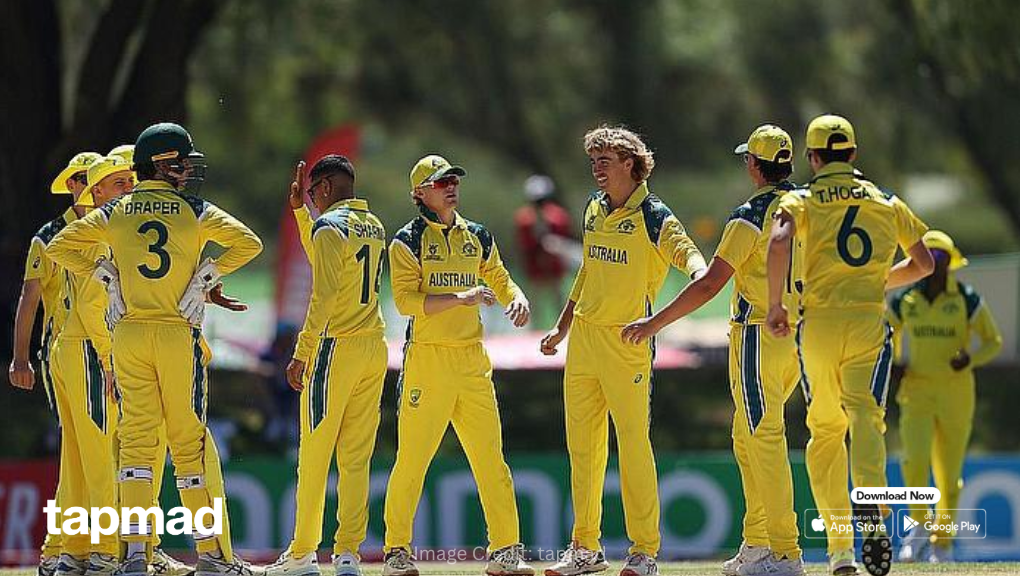

The clash between Aus and WI is one of the most memorable moments of the ICC U19 World Cup 2026. Australia has entered Super Sixes having cruised through the group stage, professionally dominating their opponents. The West Indies, on the contrary, have shown a spurt of brilliance between bouts of weakness, and this game was a crossroads to everything they hope to achieve in their championship.
Australia requires a victory to secure a semi-final qualification, and the West Indies needs to restrain their inconsistency in order to be in the race. The pitch at Harare Sports Club is expected to offer challenges, testing Australia’s pace attack and West Indies’ middle-order flair.
WI vs Aus Super Sixes Analysis :
Group 1 ranking shows that there is a noticeable gap in performance before the Aus vs WI encounter. Australia Under-19s are at the top with six points out of three games. They are not only dominant in their victories but also boast a huge NRR of +2.242, which implies that a small stumble will not doom their campaign.
West Indies Under 19s are in 4th position with four points in three matches. They have two wins, but were defeated heavily once before, which gave them an NRR of -0.414. For the West Indies, victories are not just about points; they need decisive wins to stay in contention.
|
Teams |
M |
W |
L |
N/R |
PT |
NRR |
|
Australia Under-19s |
3 |
3 |
0 |
0 |
6 |
+2.242 |
|
West Indies Under-19s |
3 |
2 |
1 |
0 |
4 |
-0.414 |
Australia Under-19 Recent Performance
Australia’s form has been nothing short of terrifying for its opposition. In their latest ICC U19 World Cup 2026 outing on January 25, they crushed South Africa by six wickets with 103 balls to spare. This followed a nearly perfect game against Sri Lanka, where they won by nine wickets while chasing a target with 228 balls remaining.
The Australian bowling attack has been the cornerstone of their success, rarely allowing opponents to cross the 200-run mark. Against Japan and Ireland, they secured eight-wicket victories, demonstrating that their top order is in clinical form.
West Indies Under-19 Recent Performance
The West Indies enter the Super Sixes in a checkered bag of results. Their last trip was a 25-run victory against Ireland (through DLS method), which saved their campaign. Previously, they had shown genuine promise, beating South Africa by 55 runs on January 22, a match that helped their batters find rhythm.
However, the Windies are still haunted by a 138-run loss to Afghanistan on January 18. That defeat exposed their vulnerability against high-quality spin and a middle-order gap in depth, pursuing high totals. Their first match against Tanzania was convincing, and the Super Sixes are of a higher standard and therefore cannot afford the lapses in concentration seen against Afghanistan.
Head-to-Head Record
History suggests that Australia holds a psychological edge in the Aus vs WI rivalry. In their last five competitive meetings at the U19 level, Australia has claimed victory 2 times, whereas 2 remained no result; however, WI won only once.
- Feb 02, 2024: Australia won by 6 wickets.
- Jan 14, 2022: Australia won by 6 wickets.
- Feb 07, 2020: West Indies won by 3 wickets.
- Jan 18, 2020: Australia won by 5 wickets.
- Feb 23, 2014: Australia won by 15 runs.
Key Batters to Watch
The outcome of this Aus vs WI clash will likely be decided by which top order handles the pressure of the Harare Sports Club better.
Steven Hogan has been the standout performer for Australia, amassing 409 runs with a staggering average of 51.13. His ability to anchor the innings allows the more aggressive Nitesh Samuel to flourish. Samuel himself holds an unbelievable average of 172, having remained not out in several clinical chases.
For the West Indies, Zachary Carter is the dangerman. His strike rate of 114.75 indicates that he likes to take the game away from the opposition early. If Carter and Captain Joshua Dorne can survive the initial Australian burst, the West Indies have the firepower to post a total that could challenge the Australian dominance.
|
Batter |
Team |
Matches |
Runs |
Average |
Strike Rate |
|
Steven Hogan |
AUS |
9 |
409 |
51.13 |
78.50 |
|
Nitesh Samuel |
AUS |
4 |
172 |
172.00 |
68.52 |
|
Zachary Carter |
WI |
9 |
280 |
31.11 |
114.75 |
|
Joshua Dorne |
WI |
10 |
267 |
29.67 |
74.16 |
Key Bowlers to Watch
Bowling wins championships, and both sides possess genuine match-winners. Charles Lachmund is the spearhead for Australia, taking 11 wickets in his last five outings. He is a master of using the new ball and has an economy rate under 5.00, making him a nightmare for opening batters.
The West Indies counter with the tournament’s most prolific wicket-taker, Vitel Lawes. With 22 wickets in just 9 matches, Lawes has been the X-factor for the Caribbean side. His economy rate of 4.32 is elite, and his ability to strike at crucial intervals will be the biggest hurdle for the Australian batters. Shaquan Belle adds further depth with 13 wickets, providing the pace to complement Lawes’ guile.
|
Bowler |
Team |
Matches |
Wickets |
Economy |
Strike Rate |
|
Charles Lachmund |
AUS |
5 |
11 |
4.94 |
19.63 |
|
Kasey Barton |
AUS |
5 |
8 |
4.99 |
26.75 |
|
Vitel Lawes |
WI |
9 |
22 |
4.32 |
22.36 |
|
Shaquan Belle |
WI |
8 |
13 |
4.70 |
28.38 |
Squad Depth and Balance
Australia Under-19s:
Captain Oliver Peake leads a squad that is perfectly balanced between aggression and stability. The presence of all-rounders like Aryan Sharma and John James gives the Aussies incredible depth, allowing them to bat deep or use up to seven bowling options.
The keeping duties of Alex Lee Young have been tidy, and the inclusion of top-order specialists like Steven Hogan ensures the team rarely panics under pressure. Their fielding has been the best in the tournament, often saving 20-30 runs per game.
West Indies Under-19s:
Under the leadership of Joshua Dorne, the West Indies squad is built on flair and raw athleticism. Jewel Andrew is a dangerous wicketkeeper-batter who can change a game in five overs. The squad features a heavy bowling unit with Vitel Lawes and Micah McKenzie leading the spin department.
The challenge for the West Indies is their "all or nothing" approach; while players like Shamar Apple can score rapid centuries, the team needs more consistent contributions from the lower middle order to survive against a disciplined Australian attack.
Tactical Battle Points
The tactical battle in this match will be decided across three key phases, starting with the Powerplay confrontation, where Australia will look to exploit any early moisture in the Harare pitch. If Charles Lachmund can remove Zachary Carter early, the West Indies middle order often struggles to rebuild and eventually crumbles under the mounting pressure of a scoreboard that refuses to move.
Simultaneously, Vitel Lawes will serve as the primary tactical weapon for the West Indies because Australia’s batters have not been tested by high-quality, disciplined spin frequently in this tournament.
Match Prediction and Outlook
The Aus vs WI clash is a test of temperament. Australia enters as the favorite based on their impeccable form and statistical superiority in every department. Their ability to win games by huge margins has given them confidence that is hard to shake.
However, the West Indies are at their most dangerous when their backs are against the wall.